












Is OKTee MARKETING already compatible with Alexa for Shopping?
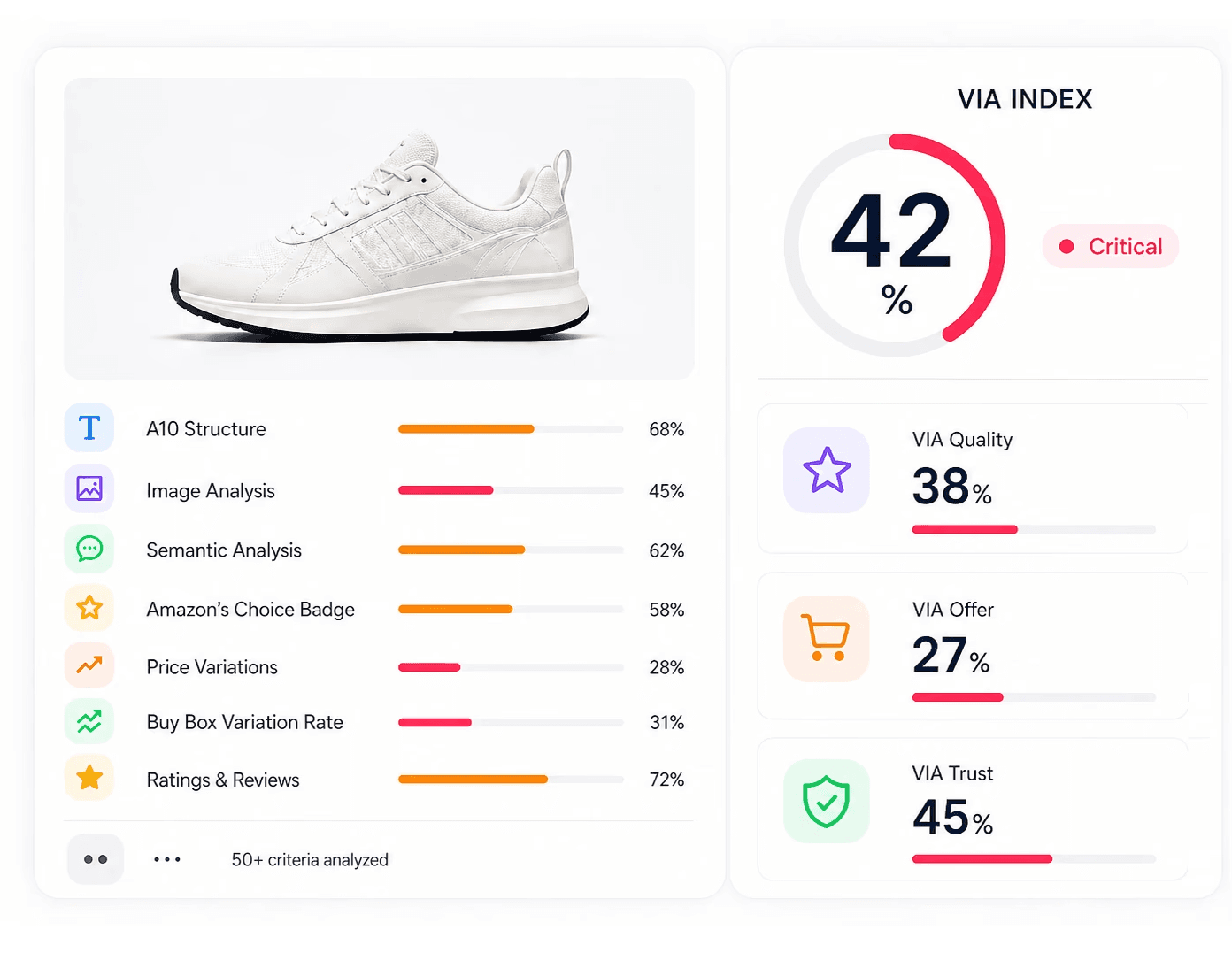
Yes. Alexa for Shopping confirms a shift that OKTee has already anticipated: AI shopping assistants do not rely only on the content of a product page. They also take into account the offer, price, availability, product comparison, and trust signals. OKTee Marketing analyzes these dimensions precisely to measure whether a product is understandable, credible, and recommendable by Amazon’s shopping AI.
Is Amazon’s shopping AI different from GEO?
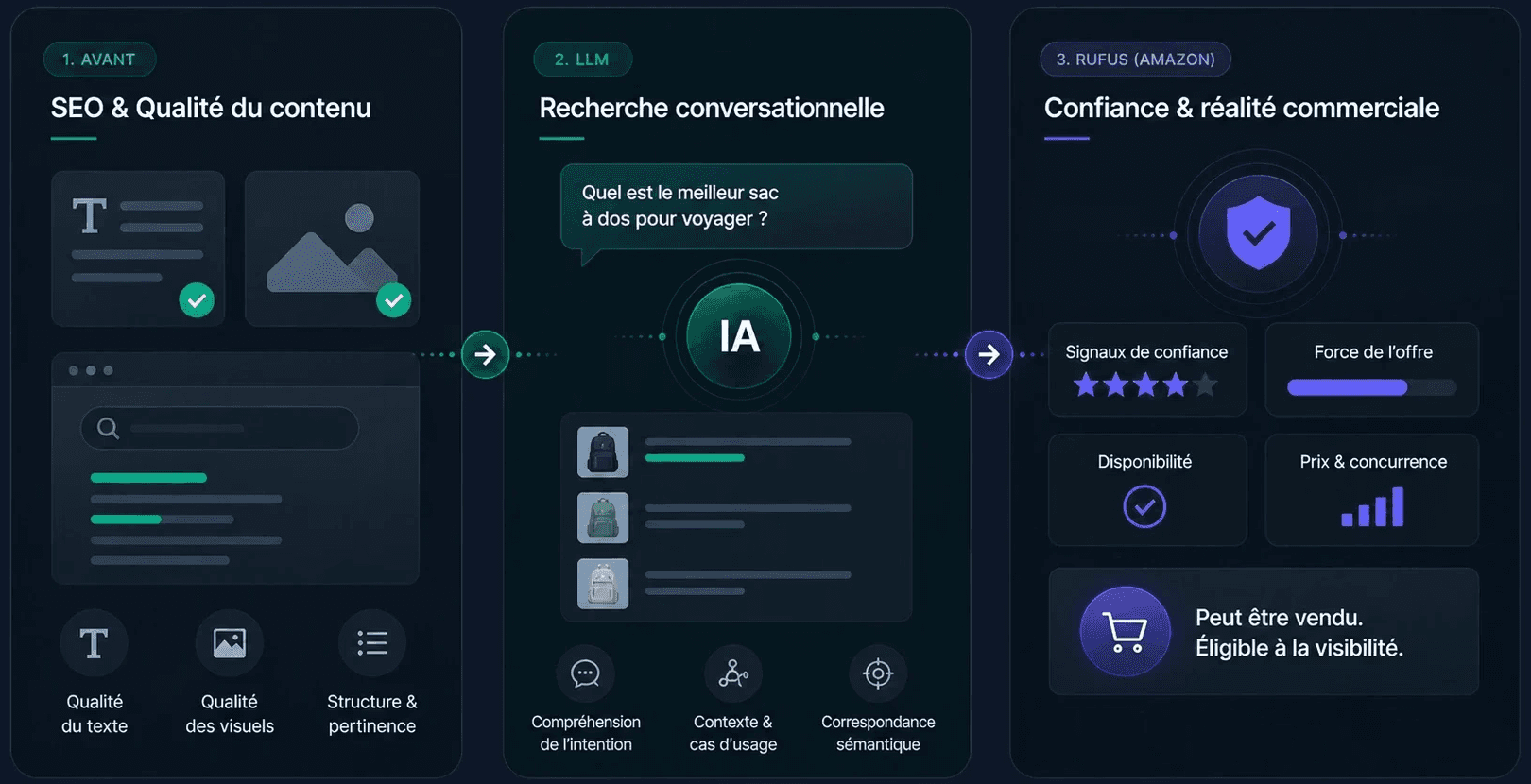
Yes, Amazon’s shopping AI is different from GEO. GEO optimizes visibility for AI. It mainly focuses on optimizing content so it can be understood, cited, or recommended by generative AI systems such as ChatGPT, Gemini, Perplexity, or Google AI Overviews. Amazon’s shopping AI goes further because it operates in a transactional environment. It does not only need to understand an answer, it needs to help choose a product. This means it can take into account broader dimensions than content alone: price, availability, delivery, reviews, purchase history, product comparison, trust signals, and the product’s actual ability to match a purchase intent. Amazon presents Alexa for Shopping as a personalized agentic assistant that relies in particular on Rufus’s product expertise and Amazon’s shopping context.
What is GEO?
GEO, or Generative Engine Optimization, refers to the optimization of content for answer engines and generative AI systems such as ChatGPT, Gemini, Perplexity, or Google AI Overviews. The goal is no longer only to rank well in a list of search results. The goal is to be understood, cited, summarized, or recommended by an AI when a user expresses a question or a purchase intent.
What’s the difference between Rufus and Alexa for Shopping?
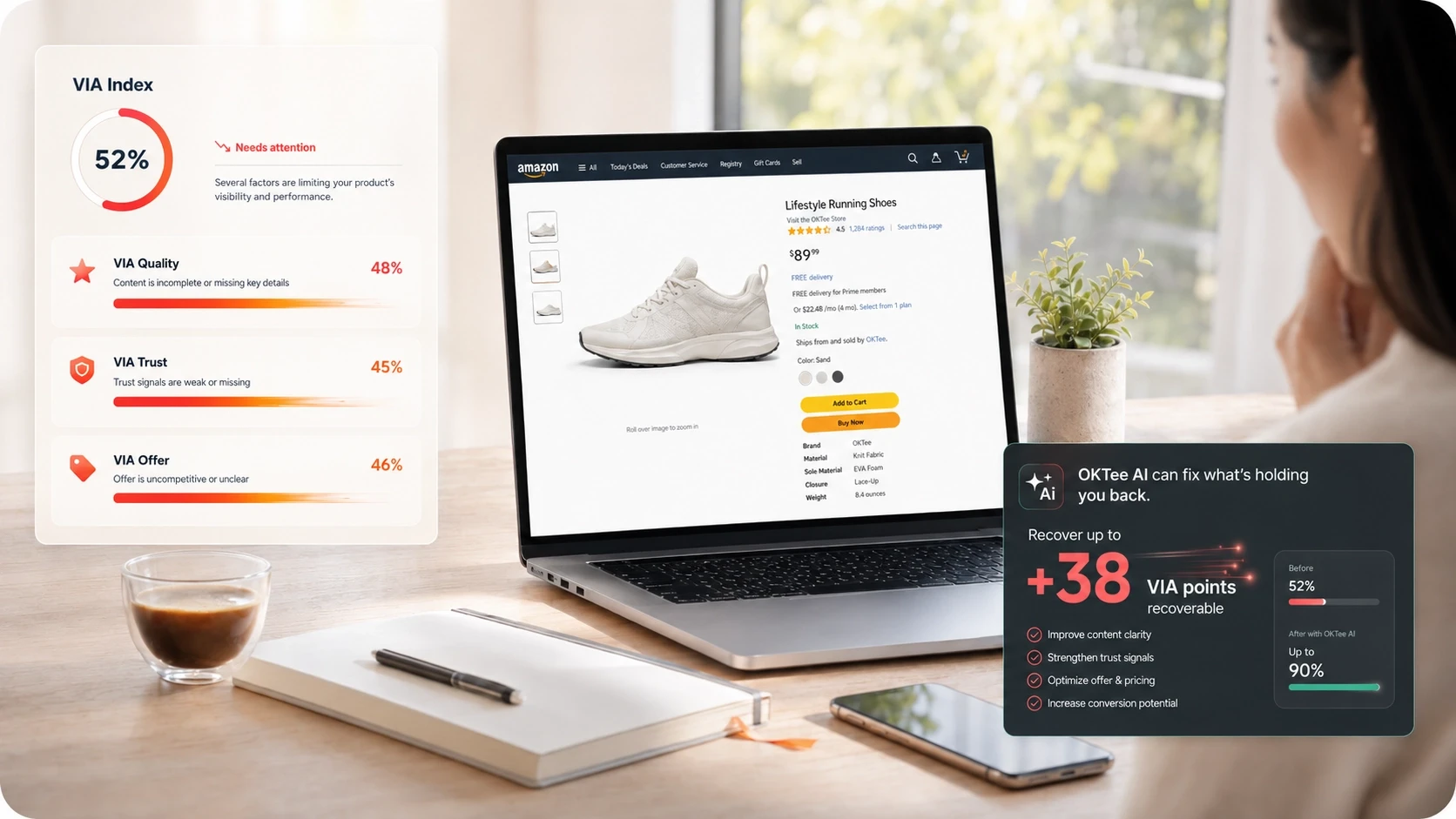
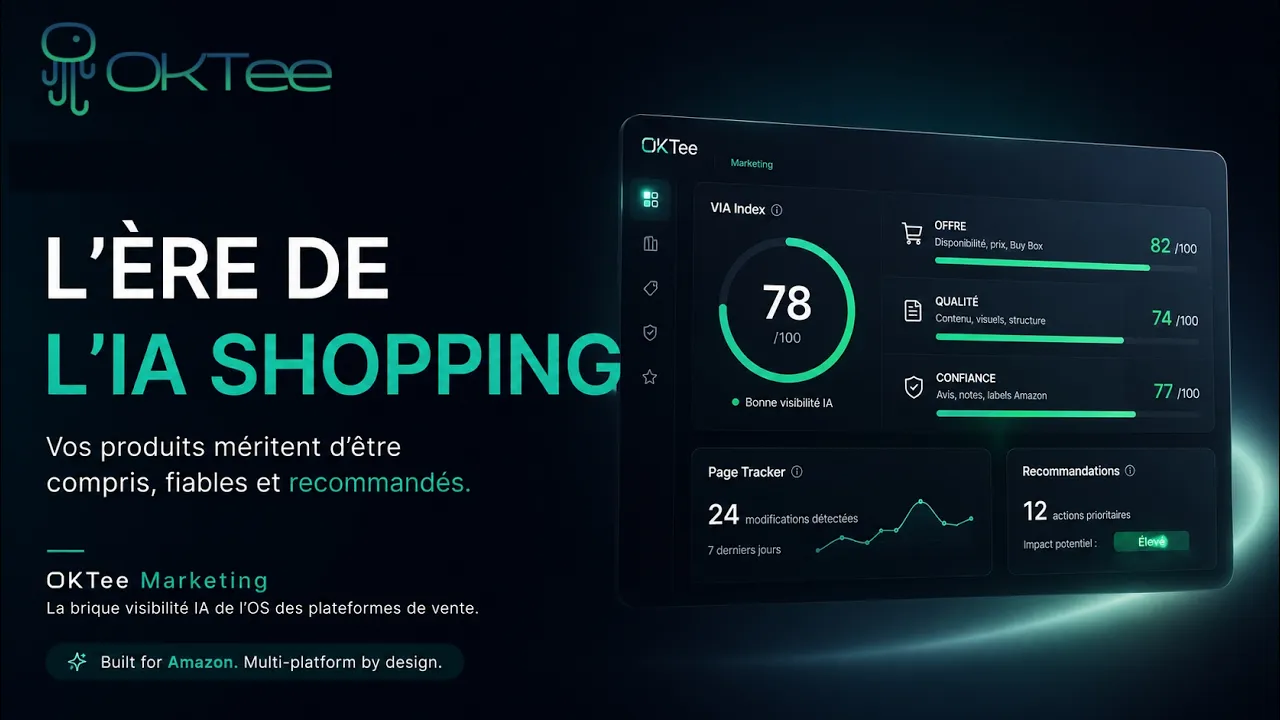
Rufus was Amazon’s AI shopping assistant. It was already analyzing product detail pages, reviews, customer questions, catalog data, and purchase signals to help shoppers compare and choose products. Alexa for Shopping is the public evolution of that capability. The main change is not that Amazon’s AI is starting to understand products. It already did that with Rufus. The real shift is that this AI is becoming more deeply embedded in the Amazon shopping journey: search, comparison, recommendations, price history, and personalized assistance. Today, Alexa for Shopping is available in the United States. For European brands, the message is already clear: prepare product content so it is understandable, credible, and recommendation-ready for Amazon’s AI. OKTee Marketing analyzes these signals precisely through the VIA Index: Quality, Offer, and Trust.
Is OKTee Marketing just a GEO tool?
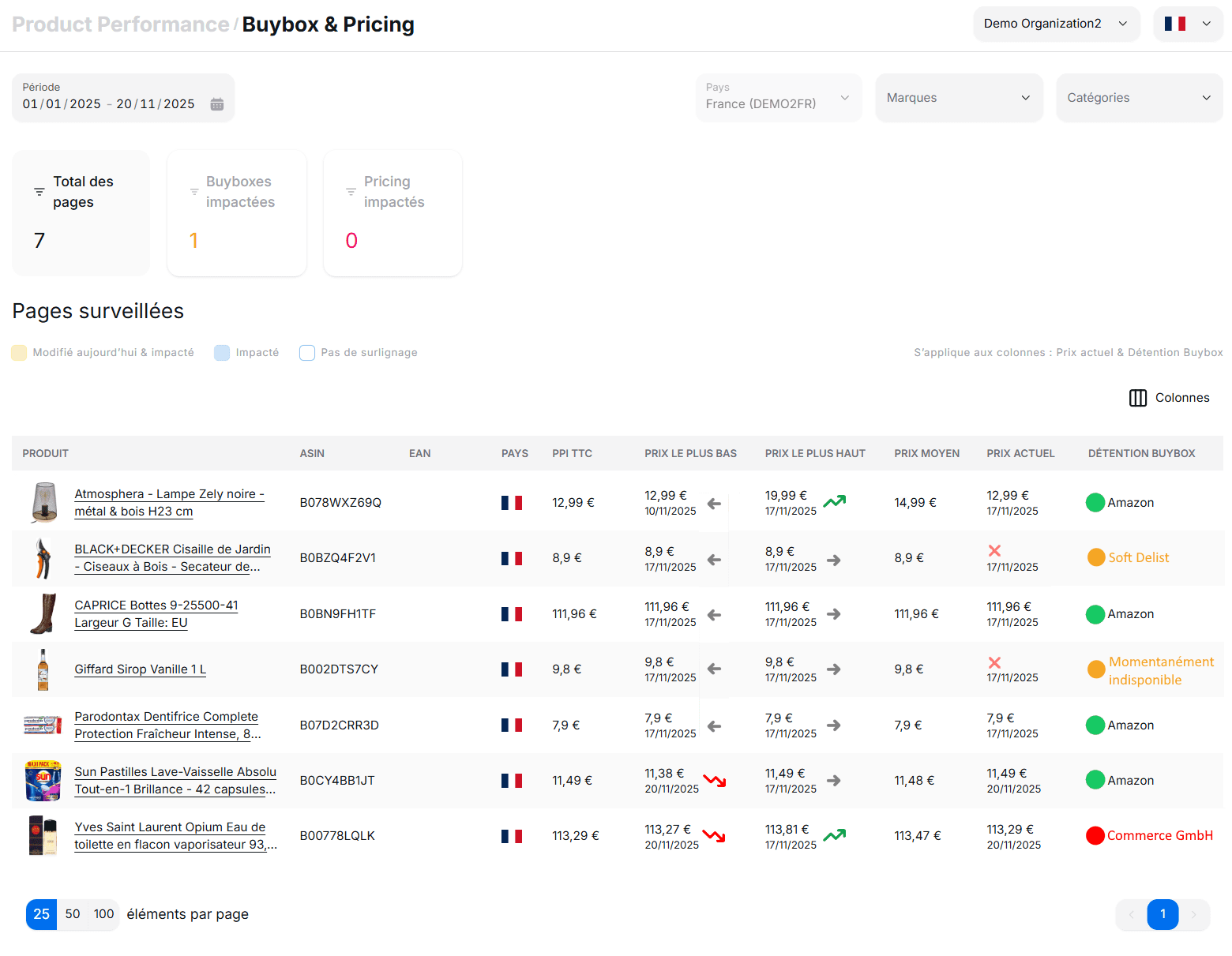
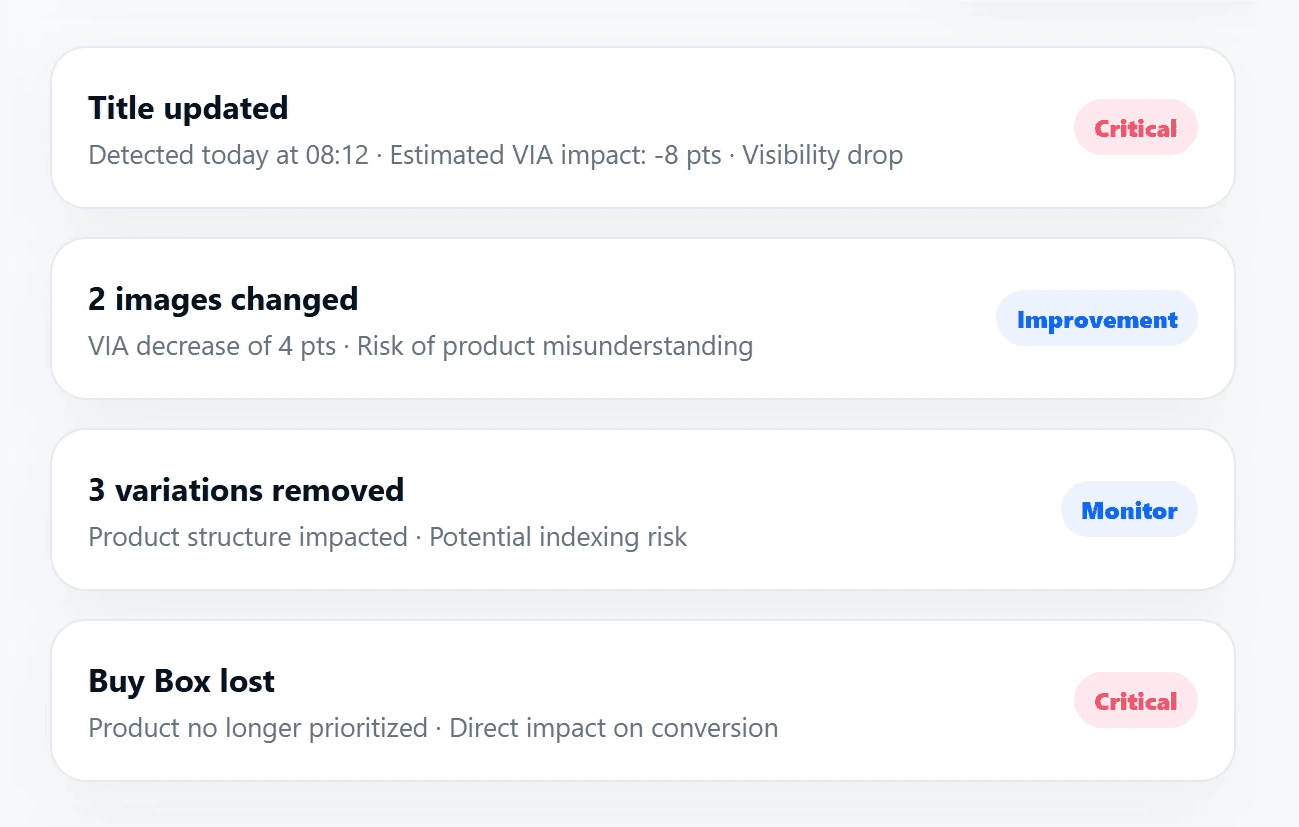
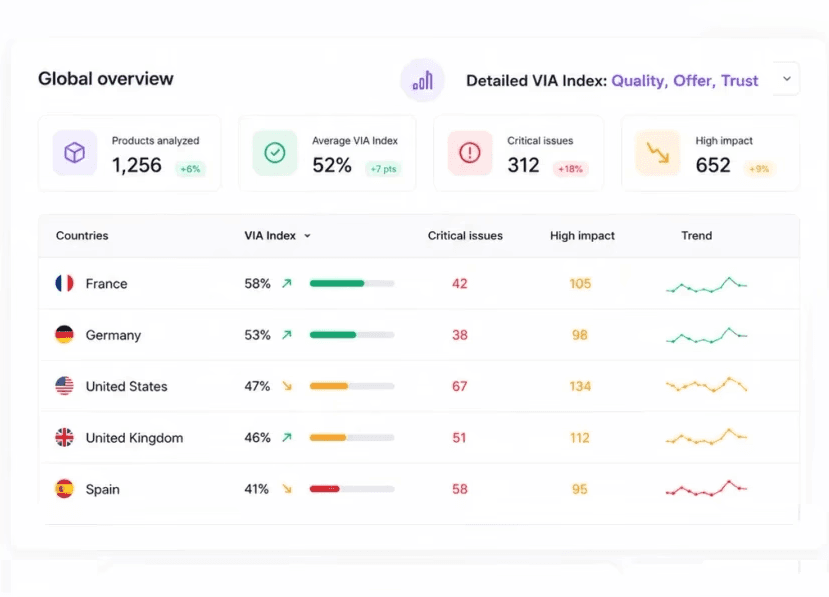
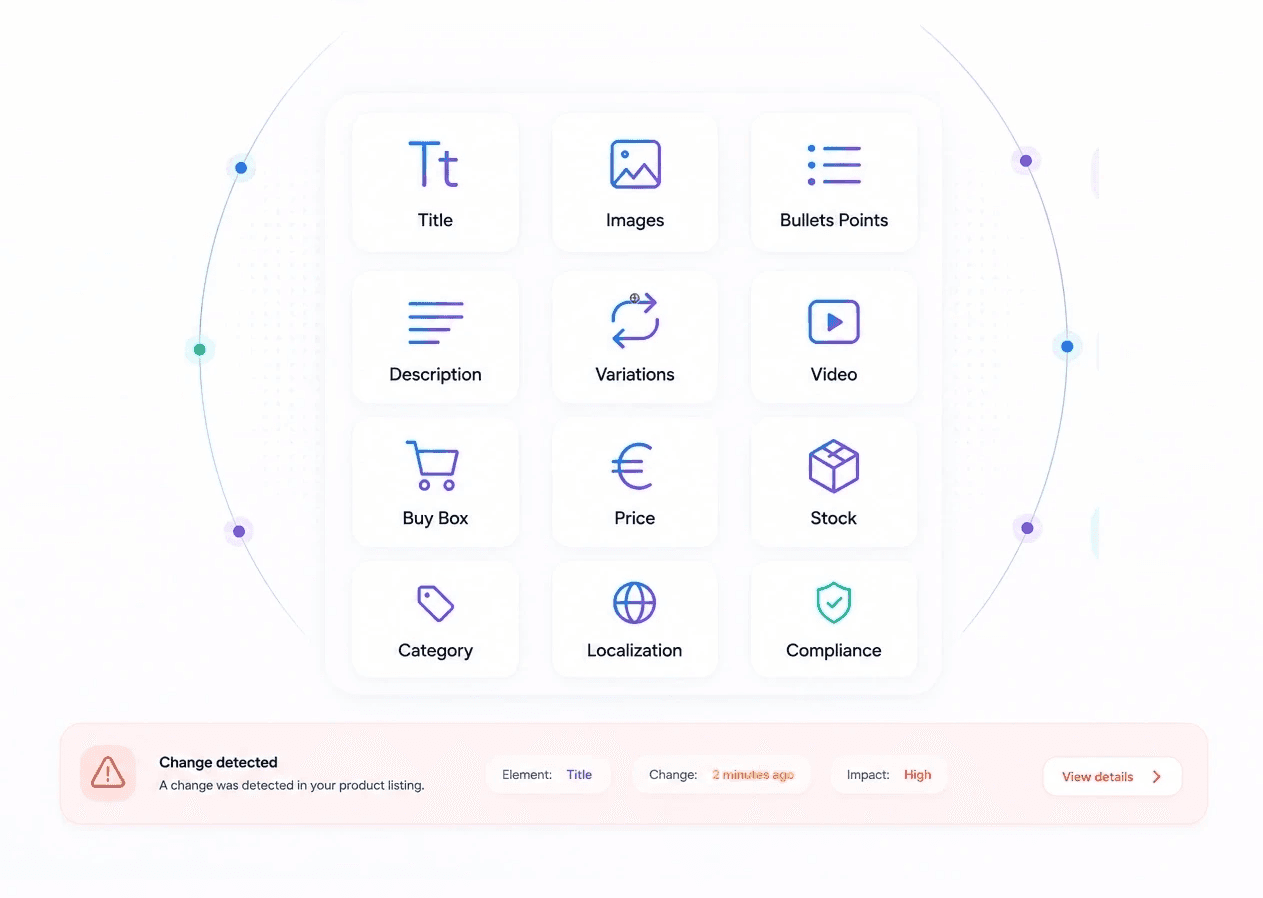
No. OKTee Marketing is not limited to editorial optimization for AI. It analyzes the overall performance of an Amazon product page: content, images, offer, Buy Box, availability, variations, trust signals, and page changes. The goal is not only to improve content understanding, but to measure the real recommendability of a product within the Amazon environment.
If my product listings are optimized for Rufus, will they also be better understood by ChatGPT, Gemini, or Perplexity?
Yes, to a large extent. A clear, structured, complete, and consistent product page is more likely to be better understood by generative AI systems. The fundamentals are similar: strong content helps AI understand the product, its use cases, its benefits, its differentiators, and its proof points. However, Amazon adds its own signals: offer, price, availability, Buy Box, reviews, and commercial consistency. That is why OKTee Marketing is not limited to content alone.
Should you connect Vendor Central or Seller Central?
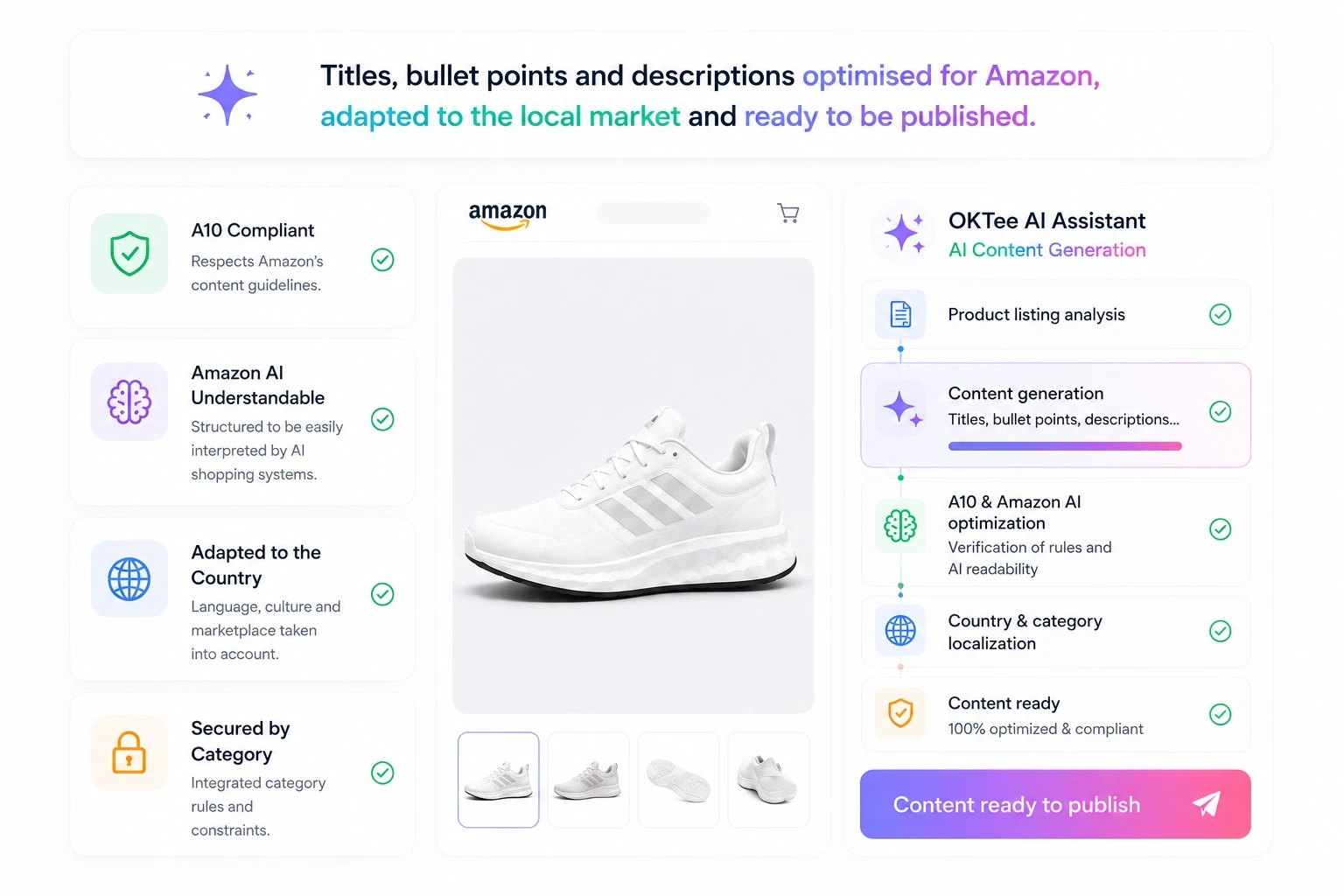
Not initially. OKTee Marketing can analyze your product pages without connecting to Vendor Central, Seller Central, or your ERP. API connectivity becomes valuable later to automate certain updates or enable more advanced workflows. In a future release, a Vendor Central connection could also allow, depending on the enabled scope, optimized content to be sent directly to Amazon: titles, bullet points, and descriptions.
What is the VIA score used for?
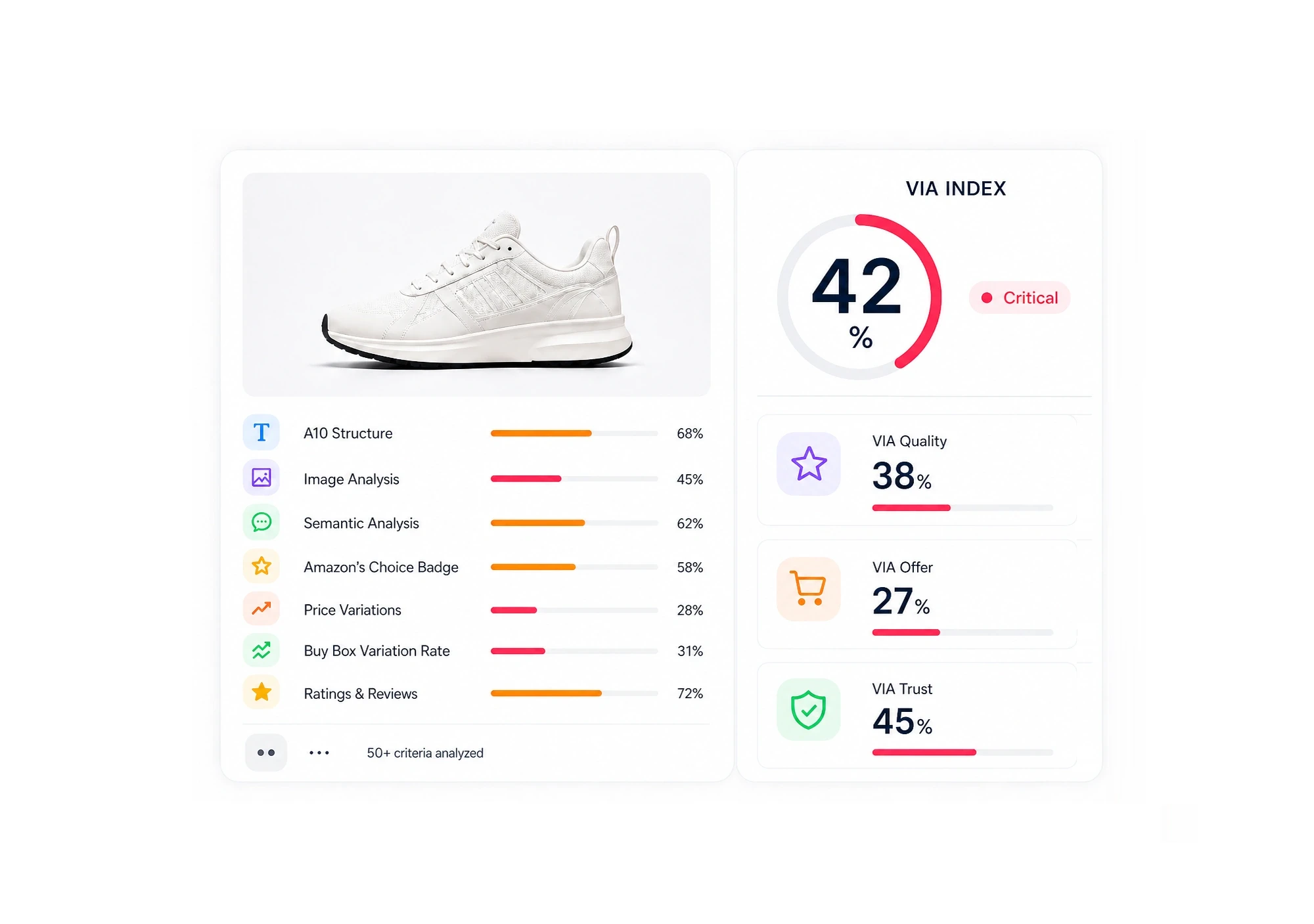
The VIA score is used to prioritize the actions that have the greatest impact on a product’s AI visibility. It quickly identifies: what limits the AI’s understanding of the product, what weakens its ability to be recommended, and what concretely limits its ability to be purchased. The VIA score turns this analysis into a clear, comparable, and directly actionable rating that helps teams prioritize and manage corrections.
How does OKTee OS help analyze leakage and chargebacks?
OKTee OS connects operational anomalies—such as delays, shortages, receiving discrepancies, penalties, deductions, or disputes—directly to financial impact. Our platform identifies the root cause of revenue leakage, pinpointing the affected order, surfaced evidence, and next steps for resolution.
Does OKTee OS provide insights into why certain products are rejected?
Yes. OKTee OS analyzes rejection drivers by brand, category, product, or ASIN. This identifies root causes—including stockouts, pricing anomalies, unauthorized listings, unorderable products, end-of-life status, or catalog data errors.
What does the OKTee OS Finance module cover?
The Finance module tracks penalties, shortages, chargebacks, disputes, trade spend, credit memos, dunning, and payments. Its purpose is to make every deduction fully traceable, auditable, disputable, and recoverable.
Is OKTee OS available for brands?
Yes. Brands get a dedicated dashboard restricted to their own data. A light version provides a streamlined, high-level summary. The advanced version unlocks custom date ranges, filters, data exports, and a consolidated view for brands partnering with multiple hubs.
How does OKTee OS leverage AI?
AI flags anomalies, prioritizes actions, explains risks, and generates operational reports. Wholesalers get a comprehensive, unified view, while brands access insights tailored strictly to their specific scope.