Prime Day 2026: What the $26.4B GMV Surge Reveals About the Future of Retail
News & Insights
61 min read
Prime Day 2026 hit $26.4B in US online sales according to Adobe. Inside consumer spending trade-offs and key ecommerce trends.
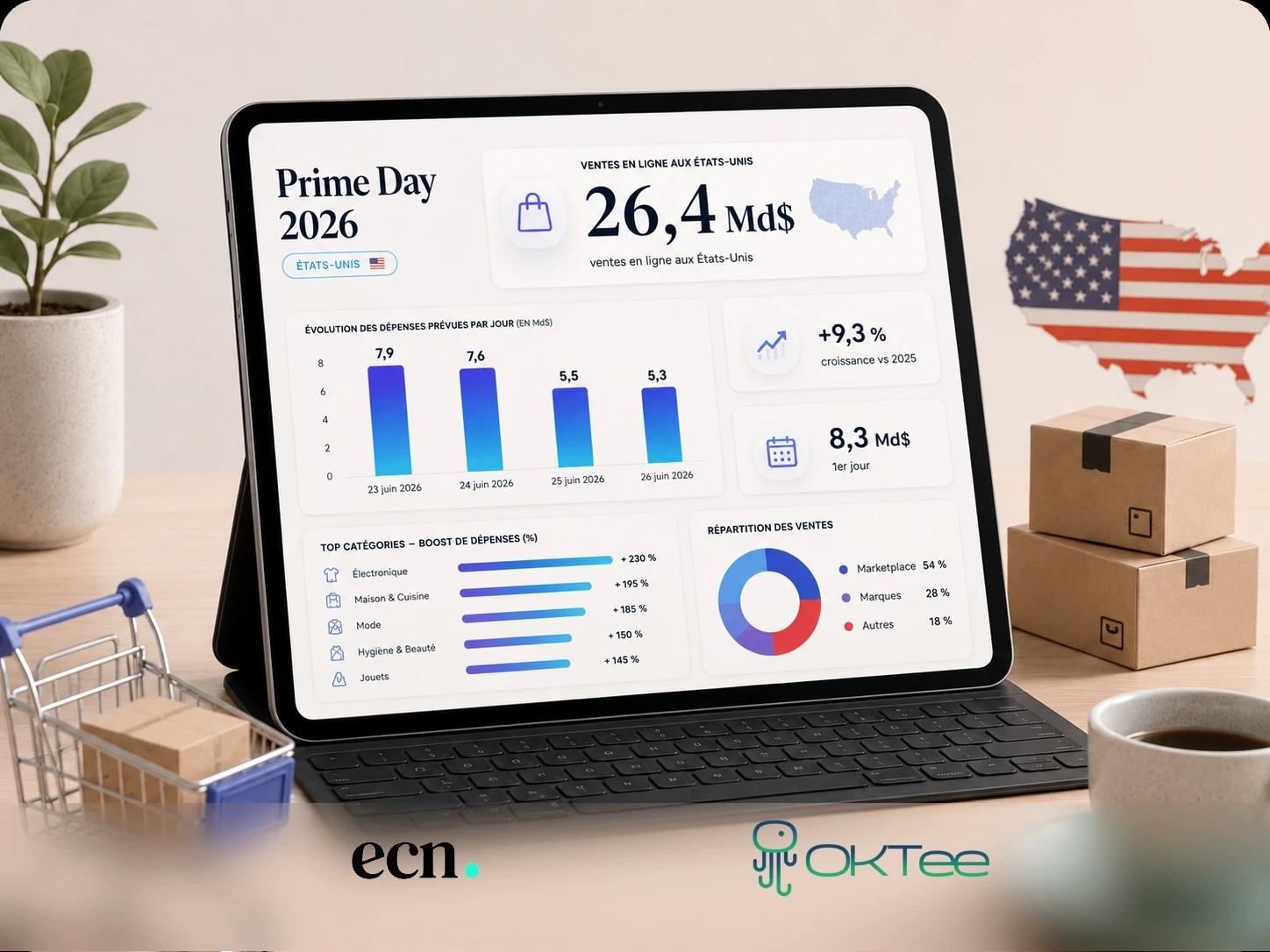
Prime Day 2026 highlights a seismic shift in e-commerce: consumer spending remains highly active, but shoppers are increasingly strategic. According to Adobe data reported by E-commerce Nation, US online sales during the event reached $26.4 billion.
While this milestone proves that major retail moments retain massive pull, it also signals a mature market where growth is won on price precision, catalog relevance, stock availability, and a brand's ability to capture highly discerning demand.
Why Prime Day 2026 is a critical business indicator
Prime Day has evolved beyond an Amazon-only event into an industry-wide barometer for digital commerce. Peak traffic and volume during these high-velocity days provide critical early indicators of consumer demand, category performance, price sensitivity, and digital shopping patterns.
The $26.4 billion US revenue milestone confirms that consumers aren't pulling back from digital channels. They are buying in volume, but with a heightened focus on promotional value, ROI, and category prioritization.
Unpacking the $26.4 billion milestone
A sales volume this high proves that tentpole promotional events still successfully concentrate consumer demand. For brands and retailers, this underscores the necessity of optimizing catalogs, inventory, pricing, and campaigns long before the event launch.
However, this number goes beyond raw GMV performance. It reflects a hyper-competitive landscape defined by player saturation, high promotional noise, and shoppers who are highly adept at cross-channel comparison.
Consumers are buying, but with higher selectivity
Perhaps the most critical takeaway is behavioral. Consumers haven't stopped spending; they have become more intentional. They wait for optimal pricing, cross-compare offers, review social proof, and prioritize high-utility or high-value purchases.
Impulse buying is declining in favor of highly rationalized purchases
Promotional offers must be transparent and credible
Low prices alone fail to convert without brand trust
In-stock availability and fast shipping remain critical conversion drivers
Which categories win the most during high-velocity events?
Peak promotional periods typically boost high-consideration and high-index categories where price elasticity is high: electronics, home goods, beauty, appliances, daily essentials, and accessories. Consumers routinely defer planned purchases to take advantage of these events.
For merchants, success depends on pre-event readiness. Winning the cart requires early optimization: securing inventory, setting competitive price points, polishing PDPs, building review velocity, and ensuring a seamless post-purchase experience.
Key takeaways for enterprise e-commerce strategies
Prime Day 2026 demonstrates that digital commerce performance relies on a holistic execution strategy. While media spend drives traffic, final conversion is won on product content, price intelligence, inventory depth, brand trust, and operational fulfillment.
1. Optimize catalogs ahead of peak demand
Product detail pages (PDPs) must be complete, high-resolution, clear, and optimized for high-intent search queries. A weak PDP will fail to convert, even when backed by aggressive discounting.
2. Protect brand equity during pricing fluctuations
Competitive pricing is non-negotiable, but race-to-the-bottom discounts can erode brand value. Merchants must deploy smart pricing strategies that balance discounts with margin protection, stock levels, and category objectives.
3. Prevent stockouts during traffic surges
Going out of stock during a peak traffic event costs more than a lost sale. It hurts search rankings, breaks organic momentum, and negatively impacts algorithmic visibility on major marketplaces.
Conclusion
The results of Prime Day 2026 showcase a dynamic yet demanding digital commerce landscape. Consumers continue to spend at scale, but with surgical precision. To win future promotional periods, brands must look beyond flat discounts and focus on precision execution, proactive inventory planning, and a deep understanding of shifting consumer expectations.
Source: E-commerce Nation article "Bilan Prime Day 2026 : les ventes en ligne atteignent 26,4 milliards de dollars aux Etats-Unis," based on Adobe data. URL: https://www.ecommerce-nation.fr/bilan-prime-day-2026-ventes-ecommerce-adobe/
Book a meeting with our experts.
A 303 session to discuss your supply chain, finance, or AI visibility challenges.
Related Products
Similar Products