Prime Day 2026: Key Takeaways from $26.4B in Online Sales
News & Insights
61 min read
Prime Day 2026 reached $26.4 billion in US online sales according to Adobe. A business analysis of consumer trade-offs, pricing pressure and e-commerce behavior.
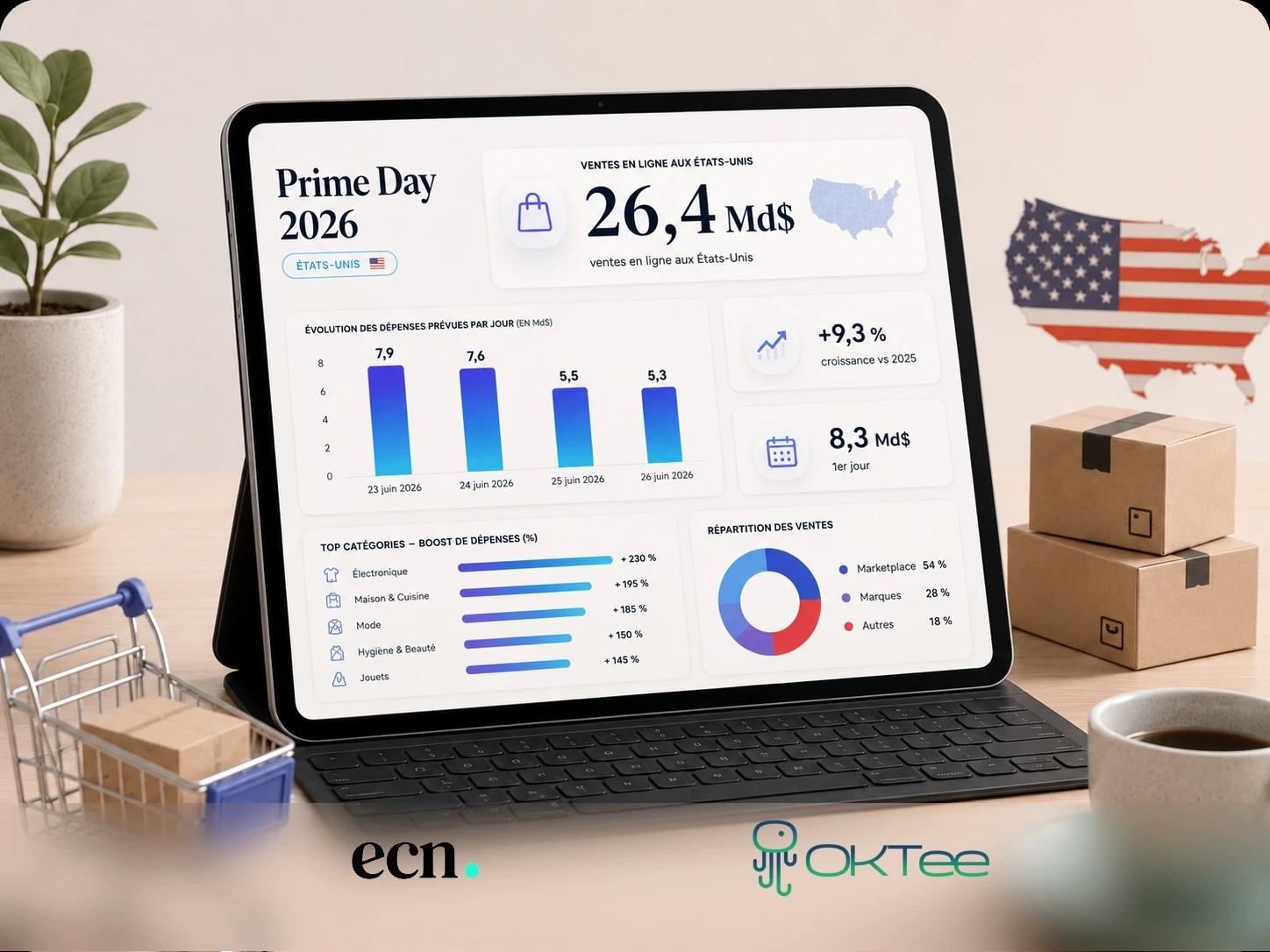
Prime Day 2026 highlights a defining dynamic in modern e-commerce: consumer spending remains highly active, but purchasing decisions are becoming increasingly calculated. According to Adobe data reported by E-commerce Nation, online sales in the US surged to $26.4 billion during the event.
While this figure proves that major tentpole sales events still drive massive demand, it also signals a mature market. Growth is no longer guaranteed; it requires pricing discipline, highly relevant offers, robust inventory levels, and the tactical ability to capture highly discerning shopper intent.
Prime Day 2026 as a Strategic Business Indicator
Prime Day has evolved beyond a single-retailer event into a critical barometer for the broader retail landscape. Digital sales volumes during this window offer early visibility into consumer demand, category performance, price elasticity, and shifting digital buyer behaviors.
The $26.4 billion US market performance confirms consistent demand, but reveals that buyers are strategically leveraging promotional event windows to optimize budget allocation and trade up in value.
Unpacking the $26.4 Billion GMV Milestone
A volume of this scale demonstrates that high-impact retail events can still trigger massive demand consolidation. For brands and merchants, it reinforces the necessity of proactive catalog optimization, inventory forecasting, pricing strategy, and promotional targeting well ahead of the event.
However, this performance should not be analyzed in isolation. It reflects an increasingly competitive digital shelf: higher seller density, deeper discounts, intense promotional pressure, and a buyer base highly accustomed to cross-channel comparison shopping.
The Selective Consumer: Buying Power Meets Precision Shopping
The most critical takeaway is the shift in shopper behavior. Consumers aren't spending less; they are spending smarter. They wait for optimal promotional windows, run price comparisons, evaluate social proof, and prioritize high-utility purchases.
Impulse buys are replaced by highly rational, pre-planned purchasing decisions.
Offers must be highly transparent, credible, and simple to evaluate.
Deep discounts fail to convert if the brand lacks perceived trust and authenticity.
In-stock reliability and fast shipping speed remain critical conversion drivers.
Which Product Categories Are Winning the Promotional Peaks?
High-velocity events like Prime Day consistently benefit high-consideration and highly price-sensitive categories: consumer electronics, home goods, beauty, appliances, and everyday essentials. Shoppers leverage these windows to pull forward planned purchases.
To succeed, brands must look beyond day-of execution. Long-term margin preservation and volume growth depend on pre-event readiness: optimized supply chains, cohesive pricing architectures, high-converting product detail pages (PDPs), strong review volume, and streamlined fulfillment.
Key Takeaways for Enterprise E-Commerce Strategy
Prime Day 2026 proves that e-commerce growth requires a synchronized execution model. Mid-funnel marketing drives traffic, but conversion requires highly optimized digital shelf execution, pricing precision, stock availability, and operational agility.
1. Optimize Catalog Readiness Early
Product detail pages must be complete, visually optimized, and aligned with search patterns. A poorly optimized listing will suffer from low conversion rates, regardless of the discount depth.
2. Protect Margins with Dynamic Pricing Strategies
Price is a key lever, but aggressive discounting can erode brand equity. Successful merchants utilize dynamic pricing strategies that balance margin, search visibility, and category goals.
3. Establish Robust Inventory Safeguards
Stockouts during promotional spikes damage more than immediate conversion. Out-of-stock events degrade organic search ranking, algorithm authority, and long-term customer lifetime value.
Conclusion
Prime Day 2026 points to a dynamic yet demanding enterprise e-commerce landscape. Scale is achievable, but winning on the digital shelf requires absolute precision. Future promotional peaks won’t be won on price alone: they will be dominated by brands with superior operational execution, targeted merchandising, and a deeper understanding of shifting consumer intent.
Source: E-commerce Nation, Bilan Prime Day 2026 : les ventes en ligne atteignent 26,4 milliards de dollars aux Etats-Unis, based on Adobe data. URL: https://www.ecommerce-nation.fr/bilan-prime-day-2026-ventes-ecommerce-adobe/
Book a meeting with our experts.
A 303 session to discuss your supply chain, finance, or AI visibility challenges.
Related Products
Similar Products